Find Your Route In
From first time to full time.
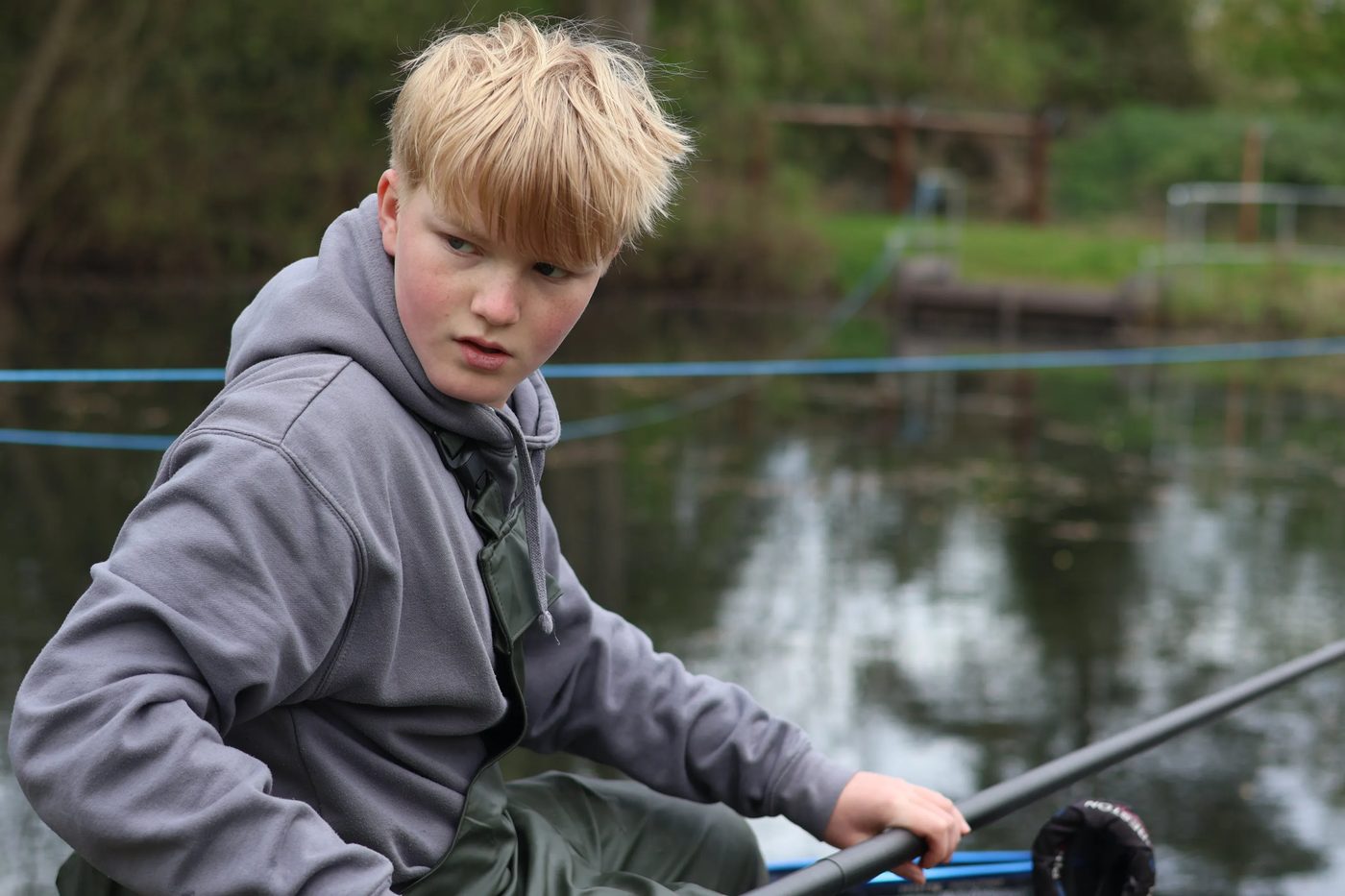
School Of Fish runs two delivery streams, one for adults and one for juniors. They share the same coaches, the same standards, and the same SOF Diploma running through them.
Pick the route that fits your life. We'll handle the kit, the bait, the tuition and everything else.
For Adults
Course-shaped. Adult-only sessions. Priced like you'd expect.
Never fished? Start here.
Three hours on a weekend with up to six adults per session and two coaches. We provide everything you need. Turn up, fish, catch something, go home. You don't need experience, kit or membership.
Book the whole session exclusively for £150. Perfect for hen and stag dos, corporate days, birthday groups, or a private session with friends.
Get properly good, properly fast.
Four consecutive Saturday mornings, three hours each, with the same coach and the same group of adults from start to finish. By the end of the course you'll have earned your First Cast and Hooked awards, started on Lone Ranger, caught fish unaided on at least two methods, had an honest conversation about what kit to buy (and what not to), and got a proper answer to whether angling is for you.
You complete it. You get a certificate, photos and a story to tell. After that it's up to you whether to keep going.
Hooked? Three ways to keep going.
A monthly adult-only Saturday session you can book as and when. The slow-burn route through the rest of the Diploma.
Single-topic deep dives. Float on the Nene. Intro to the Pole. Feeder for Bream. Lure for Pike.
A Sunday-morning fishing meet with a loose theme. The community side of School Of Fish.
For Juniors
From a first cast to a competing match angler.
Never fished? Never caught a fish?
An adult to every learner, two learners to a platform. We provide all the kit and bait. It's a no-pressure first taste of angling and a brilliant day on the bank. Kit Check, Safe Hands and First Cast are all earnable on the day, and if the fish play, the whole First Cast Award in one session. It's open from age 4, and it suits any child who can follow simple instructions and stay with their coach. If you're not sure it's right for your child yet, ask us before you book. See exactly what happens at a first session.
The next step after your first time.
A fortnightly fishing club run by qualified coaches. Learn new skills every session, work through the SOF Diploma, and become a real angler. This is where most of our juniors find their feet.
School Of Fish Squad.
For juniors who want to compete. Learn how to weigh in, fish to a clock, and win matches. The Squad trains regularly and fishes recognised junior competitions through the season, including the Let's Fish League and the National Celebration of Young People and Fishing. Perfect if competition is your thing.
What joining the Squad involves
The Squad is for juniors who want to compete, and it asks a bit more than Skills School does. Here is the whole of it before you decide.
What we give you
Regular training with qualified coaches, a season plan published before the season starts so you know the dates and what to bring, a named Squad manager to ask, a coach on the bank at matches, and loan tackle where a young angler needs it. Nobody is kept out by kit.
What we ask of the angler
Come to training and say in advance when you cannot. Practise between sessions. Look after your kit and ours. Handle every fish properly. Be someone we are glad to send out, on a good day and a bad one.
What we ask of parents
Get them there on time with what the plan says to bring, tell us in advance if they cannot make it, and tell us anything that affects their safety or how they learn.
At a match, the angler fishes
Your child sets up, fishes and packs down themselves. An adult may help with safety and land a fish if asked, and may not hold the pole, feed the swim or set the rig. A junior who is fished for does not learn, does not find out what they can do on their own, and knows it.
Cost
Membership is £50 a year. Match entries, licences and travel are yours, and we will always tell you what an event costs before you commit. If the Squad stops suiting your child they can move back to Skills School without any fuss.
The SOF Diploma
Five awards. Twenty-five badges. One angler made.
The same Diploma earned through every route.
First Cast
I've done it once, with help.
See the 5 badges ↓
Hooked
I can do it with a coach standing back.
See the 5 badges ↓
Lone Ranger
I set up, fish and pack down on my own.
See the 5 badges ↓
Thinking Angler
I don't just do, I adjust and explain.
See the 5 badges ↓
Graduate
I'm part of School Of Fish, not just a learner.
See the 5 badges ↓
All 25 Badges
Start at the top ↓
The Diploma Handbook
Every award and every badge explained in turn: what each one takes, and how to get there. Read it as a flip-through book, or jump straight to any award using the buttons below.
Open the HandbookYour Badges dashboard →
See the full badge list at a glance and track what you have earned.
First Cast Award
I've done it once, with help.
All five badges are earnable in a single good first session.
- Kit Check. I can name a rod, reel, line, hook, float and net.
Find out more
Six things make up a basic setup, and you should know each before you fish: the rod, the reel that holds the line, the line itself, the hook, a float to show a bite, and the landing net. Point at each one and say what it does. It's the vocabulary the rest of your fishing is built on. - Safe Hands. I know the bank safety rules and the don't-touch list.
Find out more
A few simple rules keep the bank safe. Look behind you before you cast so the hook catches nothing. Keep back from the slippery edge. Keep bait and hands away from your face. And learn the short list of things you don't touch without a coach, like a hooked fish's mouth or its gills. Get these right and fishing is about as safe as a day out gets. - First Cast. I've made a controlled cast with a coach.
Find out more
Your first controlled cast is the moment it clicks. Not distance, not style, just letting the line go at the right point so the rig lands roughly where you meant it, with nothing in the bush behind you. Your coach is right next to you. Do it once and you'll want to do it all day. - First Bite. I've hooked a fish, landed or lost. The bite is what counts.
Find out more
A bite is the fish taking your bait: the float dips, slides or lifts. This is for the moment you see it and strike, whether or not the fish stays on. Plenty of early fish come off, and that doesn't matter. Spotting the bite and reacting is the skill, and that first contact is usually what hooks the angler. - First Fish. I've landed and held a fish for a photo.
Find out more
The one everyone remembers. You've hooked a fish, played it to the net, and got it onto the mat. Now hold it properly, low over the mat, wet hands, calm, for a quick photo before it goes back. A tiny roach counts the same as anything bigger. It's your first fish.
Hooked Award
I can do it with a coach standing back.
- Bait Up. I can hook three different baits correctly (maggot, sweetcorn, bread).
Find out more
Each bait sits on the hook differently, and getting it right means more bites and fewer fish lost. A maggot goes through the tough end once so it keeps wriggling. Sweetcorn threads on with the hook point just clear. Bread goes on as pinched flake or a neat punch. Once it's second nature you can switch baits fast and fish what's working. - Plumb It. I can plumb the depth of a swim with help.
Find out more
You can't fish well without knowing the depth and where the bottom sits. Clip a plummet to the hook, cast out, and set the float so the bait sits where you want it: on the bottom, just off it, or up in the water. With a coach you'll learn to read what the plummet tells you. It's the difference between guessing and knowing. - Cast to a Spot. I can cast to a chosen marker three times in a row.
Find out more
Fish hold in particular places: a reed bed, the edge of an island, a feature you've spotted. Catching them means putting the bait there on purpose, three casts running, not just somewhere out in front. Accuracy beats power. Land your casts together and your bait and feed stay in one spot, which is what pulls fish in and keeps them there. - Strike & Land. I hook, play and land a fish without a coach taking the rod.
Find out more
The step from helped to doing it yourself. You see the bite, strike to set the hook, then play the fish: line tight, giving line when it runs, steering it to the net without rushing. The coach watches, hands off. Landing one from bite to net on your own is where beginner turns into angler. - Unhook & Return. I can unhook a fish on a mat and return it safely.
Find out more
Looking after the fish is part of the job, not an afterthought. Fish over a wet mat, wet hands, hold it firm but gentle, and slip the hook out with your fingers or a disgorger. Then return it so it swims off strong. A fish handled well lives to be caught again, and every good angler treats that as the point.
Lone Ranger Award
I set up, fish and pack down on my own.
- Set Up Solo. I can tie a hook to line, tie a loop knot, and set up a whip or pole rig from scratch, unaided.
Find out more
A real angler builds their own tackle. Unaided, you tie a hook to the line with a knot that holds, tie a loop to join sections, and put together a working whip or pole rig from scratch. Knots are slow and fiddly at first. Stick with them. Once you can rig up alone, you're never waiting on anyone to go fishing. - Bank Safe. I know my nearest exit, the depth of my peg, what to do if I slip in, and how to help someone else in the water without going in myself. I know the rod licence rules for my age. I wear a buoyancy aid where required, watch the weather, and call it if conditions turn.
Find out more
Fishing alone means owning your own safety. Know your nearest way off the bank, how deep the water is in front of you, and what to do if you go in, which is stay calm and get to the edge. Wear a buoyancy aid where it's needed, keep half an eye on the weather, and call it if conditions turn. The confident anglers are the careful ones. If someone else goes in, reach with a pole or throw something that floats, and never go in after them. And know the licence law before you fish alone: no licence under thirteen, free but registered from thirteen to sixteen, paid from seventeen. - Read the Peg. I can choose a swim and explain why (depth, features, wind).
Find out more
Where you sit often decides what you catch before you've even cast. Pick a peg and say why: the depth, a feature like an overhanging tree or a reed bed, or the wind pushing food and fish into your corner. There's no single right answer. What counts is choosing on purpose, not dropping into the first open spot. - Fish a Session. I fish a full session start to finish, unaided.
Find out more
Everything together, on your own. You set up, pick your spot, feed, fish, deal with whatever the day does, and see it through to the end. Bites or no bites, the point is that you ran it yourself, making the calls and fixing the small problems as they came. Do that unaided and you can go fishing on your own, which is the whole idea. - Pack Down Clean. I pack away tidy and leave the peg cleaner than I found it.
Find out more
How you leave the bank matters as much as how you fish it. Pack your kit away properly, take every scrap of line and litter home, and leave the peg cleaner than you found it. Discarded line and rubbish kill wildlife and give the sport a bad name. The best anglers leave no sign they were there. Make it a habit from day one.
Thinking Angler Award
I don't just do, I adjust and explain.
- Match the Day. I pick a method to suit the weather and water conditions, and I've shown it on contrasting days.
Find out more
Good anglers don't fish the same way every time. They read the day and match it. Cold and clear might mean small and slow on the bottom. Warm and coloured might mean shallow or on the feeder. Look at the weather and the water, pick a method to suit, and say why. You won't always call it right, but you'll be fishing with a plan, not hoping. One good call on one afternoon isn't the skill. Show it on days that don't fish alike: bright and flat, cold and coloured, windy and warm. - Change It Up. I switch bait, depth or rig mid-session and say why.
Find out more
When the bites dry up, the answer is usually to change something, not to do the same thing harder. Notice it's gone quiet and switch your bait, depth or rig, then say why. Maybe a smaller hook, maybe up off the bottom, maybe a different bait. Reading what the fish are telling you and acting on it is what marks out a thinking angler. - Five Species. I've caught five different species across at least two types of water, and can name each one.
Find out more
Part of becoming a rounded angler is knowing the fish you share the water with. Catch five different species and name each: roach, perch, bream, tench, rudd, chub, whatever turns up. Different species feed in different ways and places, so five teaches you more than fifty of the same fish. Knowing what you've caught, and why it took your bait, is real knowledge. At least two of those catches come from different types of water, a stillwater and a river, a canal or a drain. Different waters make different anglers. - Two Methods. I've caught fish using two different methods.
Find out more
There's more than one way to catch a fish, and good anglers switch between them. Catch on two different methods: float and feeder, say, or pole and waggler. Each suits different waters and conditions, so two in the locker means you're not stuck when the first one dies. More than one method is the start of being able to fish anywhere. - Talk Me Through It. I can explain a session out loud, start to finish, like coaching a beginner.
Find out more
If you can explain your fishing, you understand it, and you're close to being able to teach it. Talk a session through out loud, start to finish, as if coaching a beginner: why that peg, how you set up, what you fed, how you adjusted, what you'd change. Putting it into words is harder than it sounds, and it's what turns good anglers into good coaches.
Graduate Award
I'm part of School Of Fish, not just a learner.
- Your Best Day. I plan, fish and reflect on a session of my choice. It could be a match, a specimen attempt or a pleasure session. I pick it, I explain why, I make it happen.
Find out more
By now you know the angler you are, so this one's yours to shape. Pick the session: a match, a crack at a specimen, a relaxed few hours. Plan it, fish it, then look back on how it went. No set discipline, no right answer, just your choice and your reasons. It's the Diploma handing you the day to fish your own way. - Fishery Aware. I pass a basic fishery management check, covering fish welfare, biosecurity, water and wildlife, fishery rules and the wider sport. The Institute of Fisheries Management, the professional body for fishery management in the UK, has contributed some of the questions.
Find out more
A School Of Fish Graduate understands the whole fishery, not just the fish on the line. This is a check on the bigger picture: fish welfare and handling, biosecurity and not moving disease between waters, the water and wildlife around you, the rules that keep a fishery healthy, and your own part in the sport. It's what separates someone who catches fish from someone who looks after the water. - Kit Confidence. I can talk through my tackle box and explain what each item is for.
Find out more
A full tackle box looks like a jumble, but everything in it earns its place. Open yours and talk it through: hooks and why different sizes, shot, floats, feeders, disgorgers, forceps, the lot. Explaining what each thing does, and when you'd reach for it, shows you've got your fishing straight. It's also how you start steering newer anglers away from buying what they don't need. - Pass It On. I assist a coach with a newer learner for a full session.
Find out more
Every angler was a beginner once, and the sport only continues because people pass it on. Spend a full session helping a coach with a newer learner: showing them how to bait up, steadying a first cast, handing on what you've picked up. You find out how much you actually know, and you feel what it's like to put someone onto their first fish. - Reflect & Recommend. I complete a short written or spoken reflection on my fishing so far and give one tip I'd pass to a beginner.
Find out more
The last badge looks back at how far you've come. Put together a short reflection, written or spoken: what you found hard, what finally clicked, the day you're proudest of. Then give one tip you'd hand a beginner starting out. A fitting finish, turning time on the bank into something the next angler through the door can use.
The SOF Masters
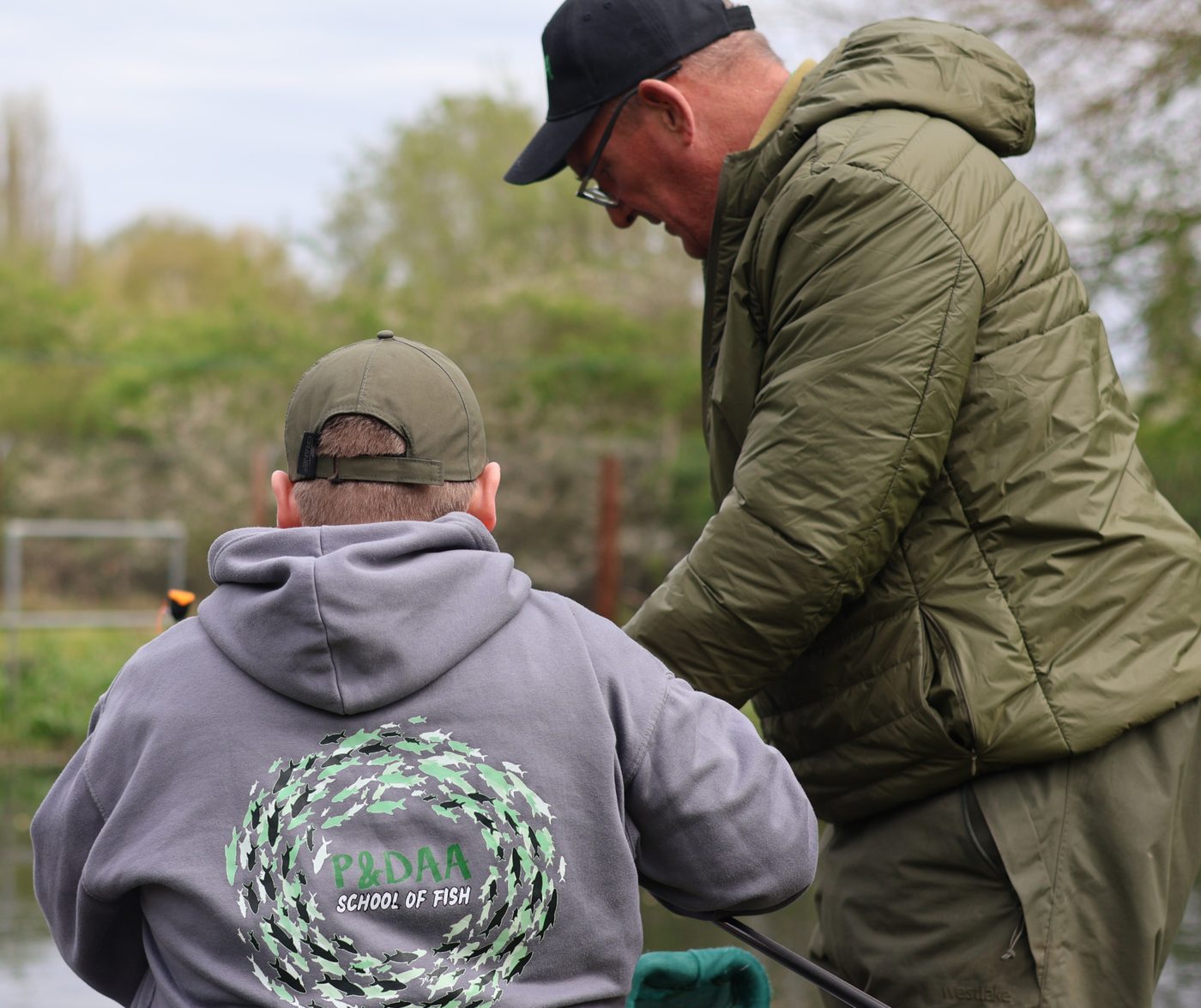
The Diploma is a path: twenty-five badges, five awards, in order, and a School Of Fish Graduate at the end of it. The Masters are different. Five awards past the Diploma, taken in any order, in any number, with no finish line, because past this point fishing stops being a syllabus and becomes yours.
The Junior Assistant Award
Give back first. For Graduates who help the next angler in.
For Graduates aged thirteen or over who want to give something back without, or before, taking a coaching qualification. Junior Assistants come to sessions and help newer learners find their feet, always side by side with a qualified coach, never on their own and never in charge. It isn't a qualification and it carries no responsibility. Keep learning, start passing it on, and when you're ready the Angling Support Assistant course is the next rung.
One award. Granted once the Diploma is complete, you're thirteen or over, and you want it.
Four specialisms sit alongside it: Carp, Lure, Specialist and Match. Each is one award with six criteria, earned on the bank through Specialist Days to the same criterion-referenced standard as the Diploma. Any order, any number, years if you want them.
The Carp Award
Big fish, patient fishing, and welfare standards to match the size of the quarry.
- Safe Rig. I tie a safe carp rig where the lead can free itself and a lost fish never tows tackle.
- Find the Fish. I read a carp water before I fish it: showing fish, bubbles and fizz, snags, margins, wind.
- Bait with a Plan. I choose and prepare carp bait for the day, and I can feed a swim without blowing it.
- Hook and Hold. I play a big fish with the clutch set right, steering it away from trouble without pulling the hook.
- Big-Fish Care. I land, hold and return a big carp with everything ready before it's hooked: mat, water, sling.
- Know the Water's Rules. I know and follow the carp rules where I fish: retention, slings and mats, bait bans, and why they exist.
Six criteria, one award. Your coach signs it in Clubmate once all six have been seen on the bank.
The Lure Award
Roving, reading water at pace, and predators handled like they matter.
- Armed and Safe. I handle lures and trebles safely: barbs crushed where rules say, forceps to hand, hooks under control moving and fishing.
- Wire On. I fish a wire trace whenever pike could take my lure, no exceptions.
- Cover the Water. I fan-cast a swim with a plan, counting down and covering depths, rather than bombing the same line.
- Change the Retrieve. I change retrieve speed, depth and action until something answers, and I can say what the lure's doing out there.
- Predator Care. I unhook, handle and return pike and perch fast and right: chin hold, trace control, no dry ground.
- Roam with Respect. I fish on the move without leaving a mark: rules, other anglers' water, banks and wildlife.
Six criteria, one award. Your coach signs it in Clubmate once all six have been seen on the bank.
The Specialist Award
One target, chosen and earned. The Thinking Angler grown up.
- Pick the Target. I set a specimen target that's real for the water: a species and a weight the venue can actually produce.
- Do the Homework. I research before I fish: venue form, conditions, seasons, and where my target lives at this time of year.
- Rig for the Fish. I build a rig for the target species, and I can defend every component choice.
- Play the Long Game. I treat blanks as information: I log conditions and results and change the plan on evidence.
- Weigh It Right. I weigh a fish properly: wet sling, zeroed scales, witnessed, fish safe throughout.
- Specimen Care. I look after big old fish like the rare things they are: extra support, extra recovery, no photo worth more than the fish.
Six criteria, one award. Your coach signs it in Clubmate once all six have been seen on the bank.
The Match Award
Fishing to the whistle, at speed, without the fish ever paying for it.
- Fish to the Whistle. I fish a match inside its rules: the draw, the all-in, the all-out, and everything between.
- Fast, Not Rushed. I set up quickly and in order, so I'm fishing while it matters.
- Feed Two Lines. I run more than one line in a match, feeding both and choosing when to sit on each.
- Keepnet Kindness. I use a keepnet the right way: staked low into deep water, never overfilled, fish in and out with care.
- Weigh-In Standard. I present my catch at the weigh-in properly: careful lift, small batches, fish returned right.
- Respect the Row. I'm a good neighbour on the bank: my feed, my casts and my noise stay in my swim.
Six criteria, one award. Your coach signs it in Clubmate once all six have been seen on the bank.