Growth Loops
From first time fishing to qualified coach and round again.
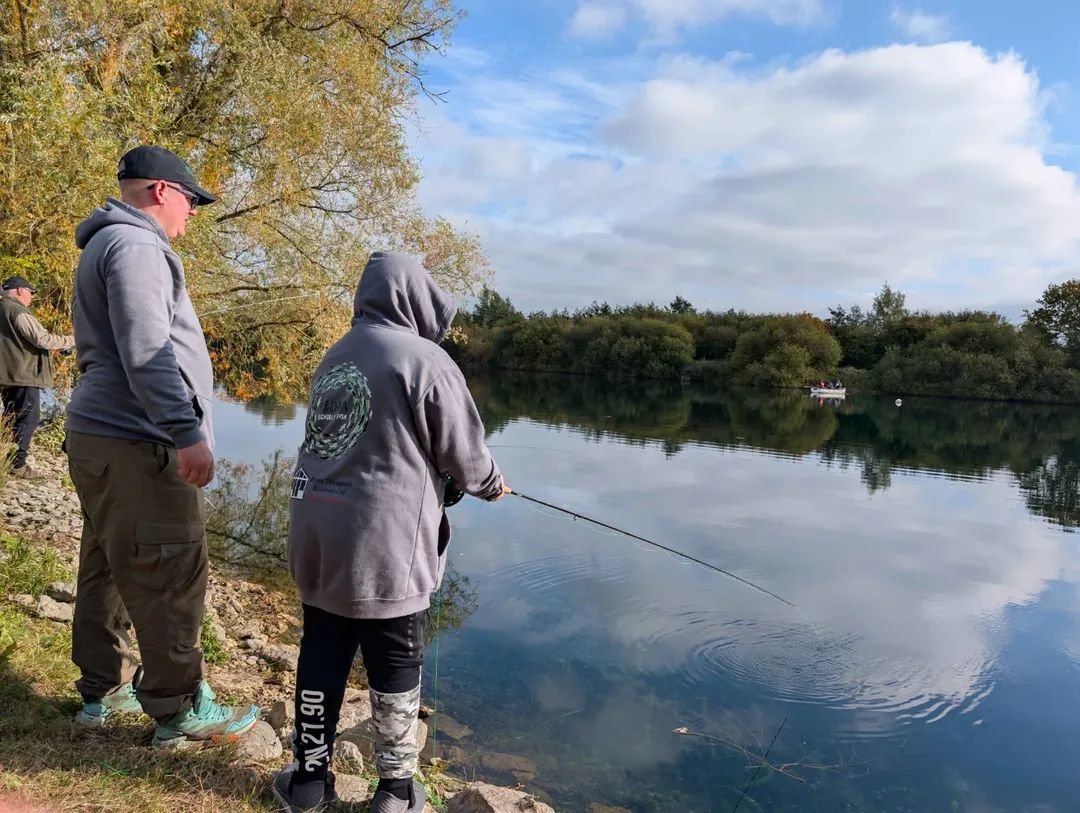
A whip, a pot of maggots, a coach who's given up a Saturday, and a small perch swinging into a wet hand. The free taster session is one of the best things this sport does, and the volunteers who run them deserve more credit than they get.
Then everyone goes home.
Ask what happens next Saturday and the answer, at most of these events, is nothing. No next session to book, no club that expects them back. The child caught a fish. The sport caught a statistic.
Between the taster and anything resembling regular coaching there's usually nothing. Between junior angling and adult angling there's a cliff the sport has watched people fall off for a generation. An adult who never fished as a child has barely an entry point anywhere. And between being able to fish and being able to teach it, the biggest gap of all: no rung, no route, no invitation.
A pathway with holes in it isn't a pathway. It's a series of exits.
So we built a loop instead. At School Of Fish the free first session is the same offer whether you're eight or sixty, and it leads somewhere on purpose: into Skills School for juniors, into adult courses for adults, and into the Diploma for everyone. Twenty-five badges, each one a named skill with a published pass line, earned in order across five awards. Nobody has to wonder what comes next, because next has a name.
Then the loop does its real work. The final award asks the learner to help teach a newer one, not as a gesture but as a requirement. At thirteen they can hold the Junior Assistant award and stand beside a coach at real sessions. At sixteen they can qualify as an Angling Support Assistant. At eighteen, a Lead Angling Coach, accredited and insured, running the same free first sessions where somebody once handed them a whip.
That's the loop closed. The learner becomes the coach, the coach makes more learners, and some of those learners become coaches. Growth that feeds itself.
The difference between a funnel and a loop is what happens when the money stops. A funnel needs refilling from the outside: another grant, another campaign, another round of free sessions that end at the car park. A loop refills itself, because every cohort contains the instructors of the next one.
It also changes what you measure. A funnel counts entries: sessions run, children reached, rods handed out. A loop counts returns: how many are still fishing in year three, and how many came back as coaches. The first set of numbers is easy and flattering. The second set is the sport.
None of this makes the taster session the enemy. A whip and a pot of maggots is still the best first hour in angling. The question is only ever what the second hour is for.
A first fish is an event. Build the path all the way round and it starts building anglers.